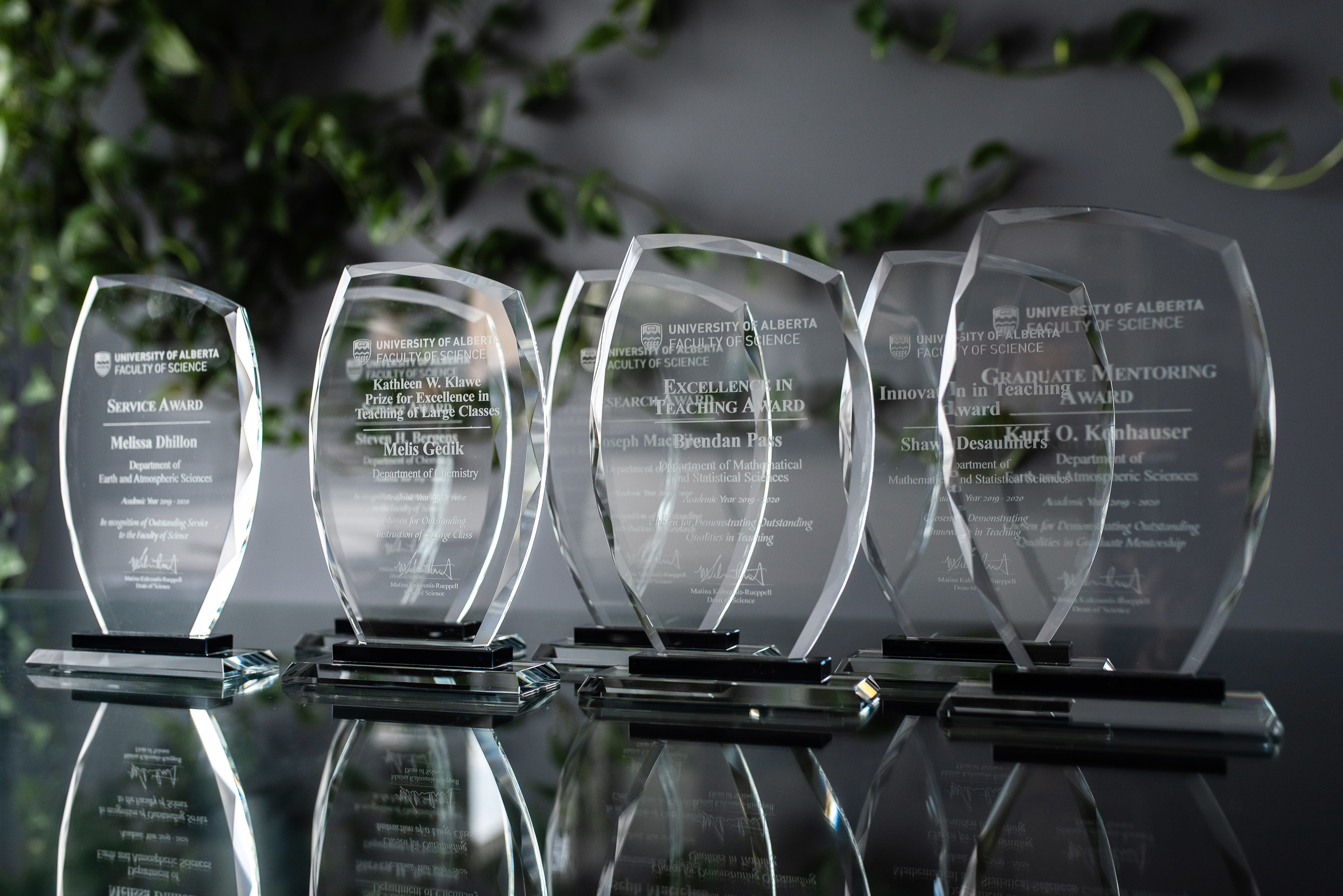
Faculty of Science Celebration of Excellence awards — an annual tradition that honours our exceptional faculty and staff. Photo credit: Dawn Graves
Each year, the Faculty of Science honours our exceptional faculty and staff at the Celebration of Excellence. This celebration is an opportunity for us to acknowledge the outstanding and tireless work of our faculty and staff and recognize particular achievements of some of our community members over the past year.
“As a scientific community, we know the scale of the challenges that our communities face. And we know how critical our research, our expertise and our mentorship of the next generation of scientists is to tackling these challenges,” said Declan Ali, dean of the Faculty of Science, at the event on April 28. “Every day, your work helps to shape the future of our communities for the better, and your dedication enables so many successes: from discoveries in the lab to supporting our students. Today is an opportunity to celebrate your incredible work and share our appreciation for all that you do.”
Please join us in congratulating the award recipients, and hear from those who were able to provide a few additional comments about their research, teaching and service.
Quick jump to award recipients:
- Karsten Loepelmann, Faculty of Science Excellent Teaching Award
- Kirk Kaminsky, Faculty of Science Innovation In Teaching Award
- Shennella Blake, Faculty of Science Service Award (non-faculty)
- Deanna Singhal, Faculty of Science Service Award (faculty)
- Stephanie Green, Faculty of Science Research Award
- Michael Woodside, Faculty of Science Graduate Mentoring Award
- Biological Sciences EDI Committee, Faculty of Science EDI Award
- Duane Froese, Faculty of Science Indigenous Initiatives Award
The Associate Dean of Learning and Innovation Besties (ADLIB) for:
- Manon Lepage, ADLIB (Biological Sciences)
- Shira Joudan, ADLIB (Chemistry)
- Sadaf Ahmed, ADLIB (Computing Science)
- Marilyn Huff, ADLIB (Earth & Atmospheric Sciences)
- Ryan Morrill, ADLIB (Mathematical & Statistical Sciences)
- Craig Heinke, ADLIB (Physics)
- Ben Whittaker, ADLIB (Psychology)
Karsten Loepelmann, Faculty Of Science Excellent Teaching Award 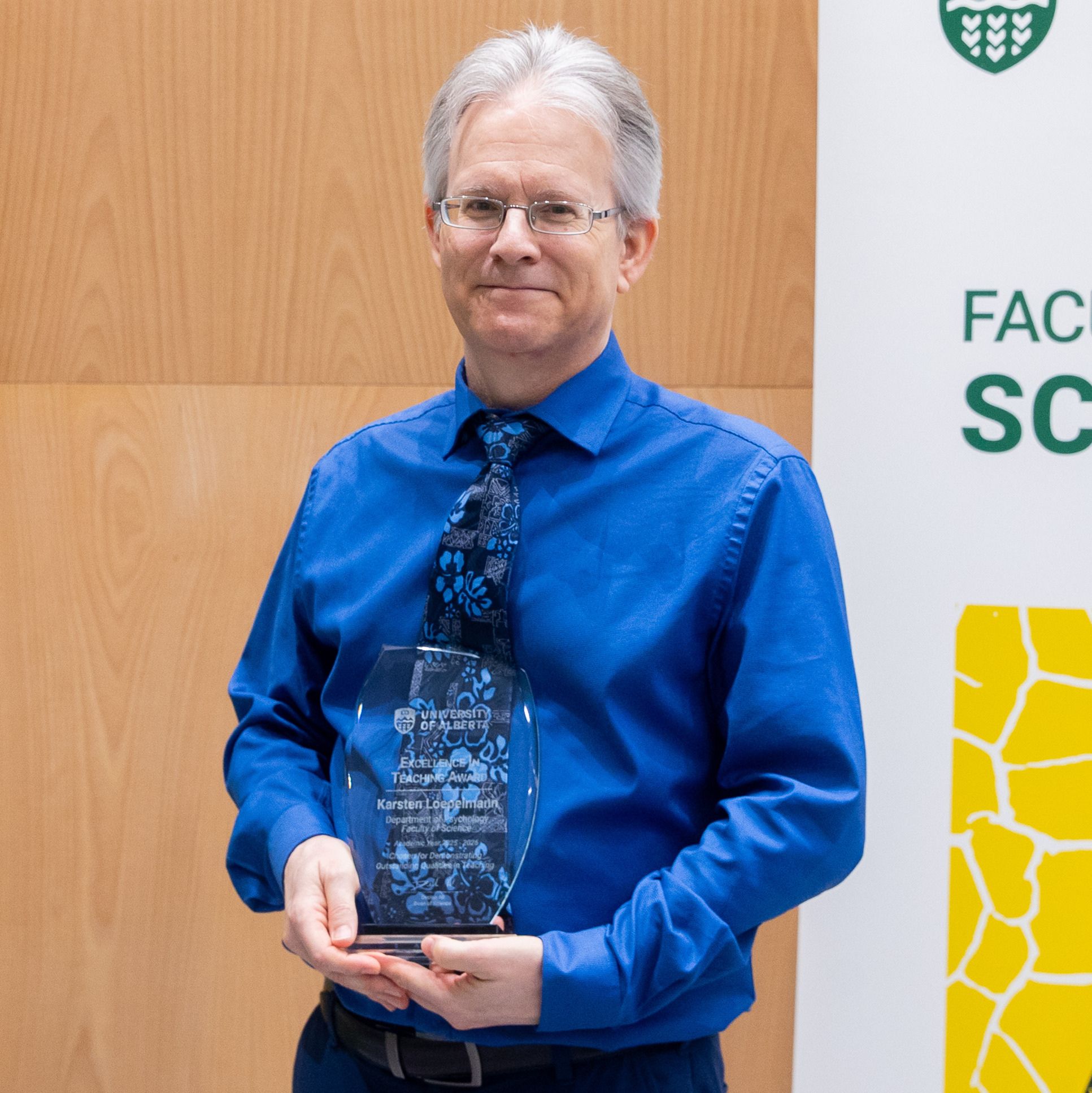
What is your position title in the Faculty of Science? What does your work focus on?
I am a full teaching professor (ATS Career), and have been teaching in the Department of Psychology since 1994. My usual courses are cognitive psychology, behaviour modification, perception, advanced perception, and human factors & ergonomics. I have previously taught variations on introductory psychology, including an early technologically enhanced course, a specialized course for nursing students, and the psychology component of Science 100. Being a precarious academic requires adaptability, versatility, and having a breadth of knowledge.
What philosophy do you bring to your work (research, teaching and/or service) in the faculty?
As an educator, my guiding philosophy is grounded in applying research on teaching and learning. I want to facilitate learning, not hinder it by applying methods that are known to be ineffective--even if they are currently buzzworthy. When I innovate a new pedagogical approach, I collect and analyze data on its utility. I am constantly striving to improve my teaching, and put in a lot of time and effort, knowing that my students are doing the same.
What was your reaction when you found out you'd received this award? What does this recognition mean to you?
I am honoured to be recognized for my teaching, and humbled to be in such distinguished company. Competition for awards is fierce, as there are many incredibly devoted and hardworking instructors in the Faculty of Science. I am fortunate to be doing what I love, but getting this kind of recognition is an amazing bonus. I hope to live up to this award!
Kirk Kaminsky, Faculty Of Science Innovation In Teaching Award 
What is your position title in the Faculty of Science? What does your work focus on?
I am a full Science faculty lecturer and the physics undergraduate advisor. The last few years I have primarily been involved with our new core MA PH 251 (Differential Equations for Physics) and MA PH 351 (Mathematical Methods for Physics I) courses, the design and delivery of which are the reason I have received this award.
What philosophy do you bring to your work (research, teaching and/or service) in the faculty?
In the classroom I bring immediacy and strive for a balance between rigour — embracing Richard Feynman's "What I cannot create I do not understand" philosophy — and computation. My delivery is real time: I almost never copy or read from my notes and I work out the problems "live" with an unfiltered stream-of-consciousness style while constantly probing students for the current reasoning or the next step. This, coupled with an absurdist sense of humour, apparently keeps in-person student engagement high. Outside the classroom, I focus on 'down-to-earth' approachability and realism in my advising work. I try telling it like (I believe) it is.
What was your reaction when you found out you'd received this award? What does this recognition mean to you?
My own students this term hinted to me that something was up in terms of nomination, but actually winning anything was still a complete surprise as I am a famously "difficult" instructor with often low-ish class GPAs. I believe I really have our associate chair, Erik Rosolowsky, to explicitly thank for his hard work in this nomination and his steadfast support during this complex transition time from our old to our new programs. I don't know how he finds the time to juggle all he does. I'd also like to thank current and former students for their support in this nomination. Developing and delivering these two ambitious courses has been a pride and joy, and a great capstone to my teaching career.
Shennella Blake, Faculty Of Science Service Award (non-faculty) 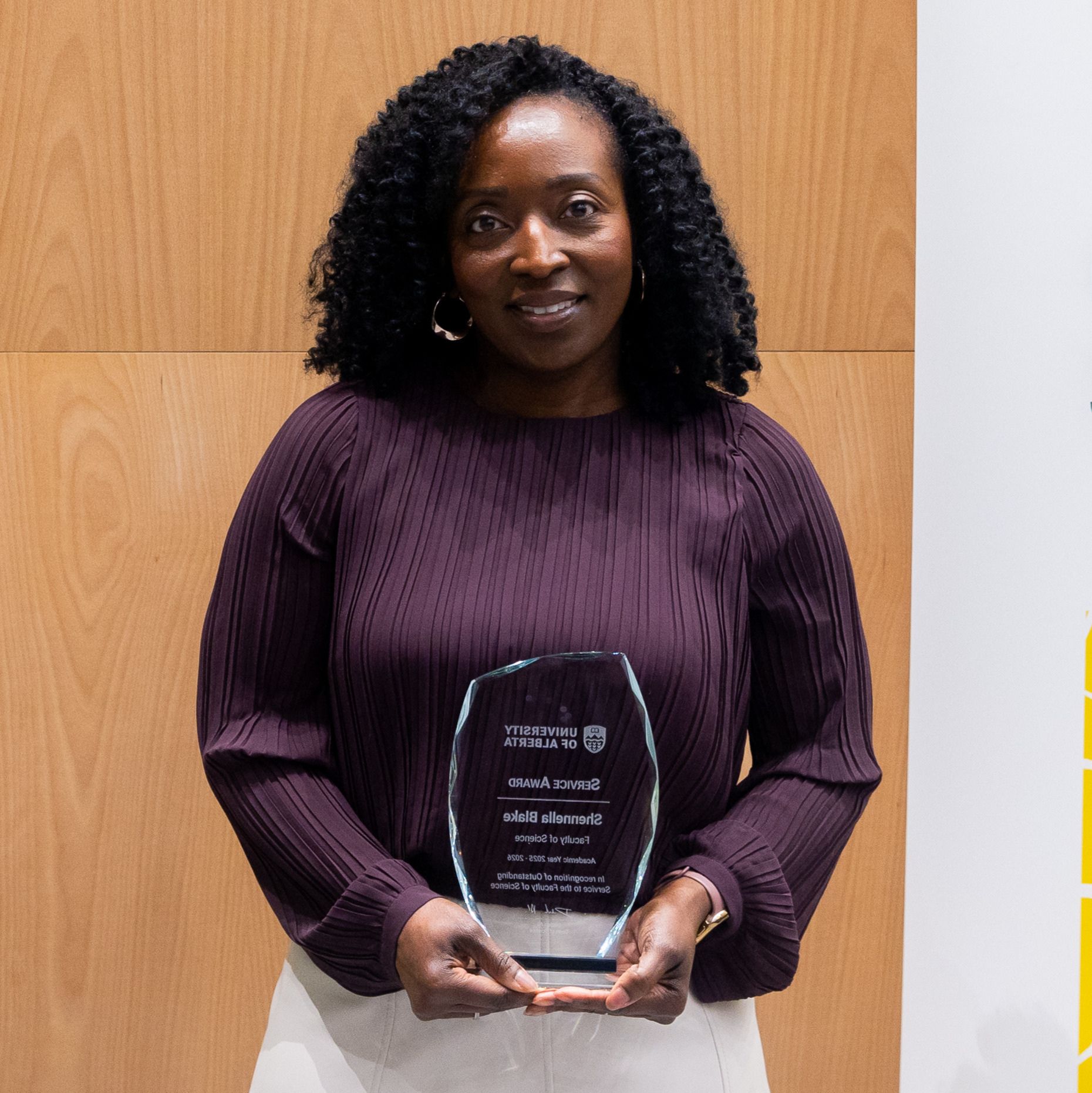
What is your position title in the Faculty of Science? What does your work focus on?
My title is manager, undergraduate programs. My work is focused on the undergraduate student portfolio which has three parts. The academic arm includes many parts of the student journey from admission to graduation. This includes admission, enrolment management, academic advising, academic standing, study abroad, graduation and more. The next arm is student engagement which covers our Science Mentor program, student orientation, student wellness and retention. The third arm is the work-integrated learning team which includes the Science Internship Program and the Student Innovation Centre.
What philosophy do you bring to your work (research, teaching and/or service) in the faculty?
I have two priority groups that I try to centre my work around: our students and my team. I feel a strong responsibility to the people who work for me and with me, and I dedicate a lot of effort to understanding their needs and perspectives. It can be hard balancing the needs of our students with operational needs and the wellbeing of staff… but I try to make sure every decision is balanced so the staff feel empowered and supported to deliver their best. When my team gives their best, our students win! Outside of this, when times get tough I have one philosophy that the wonderful Jocelyn Hall has given me… “just keep swimming”
What was your reaction when you found out you'd received this award? What does this recognition mean to you?
I was so surprised! I have worked in Science for many years and I’m so lucky to have made some great connections with amazing people. Receiving recognition like this from my Science community is deeply meaningful. We all work so hard and at times it's easy to feel defeated or too small to make a difference. Being “seen” and appreciated is powerful.
Deanna Singhal, Faculty Of Science Service Award (faculty)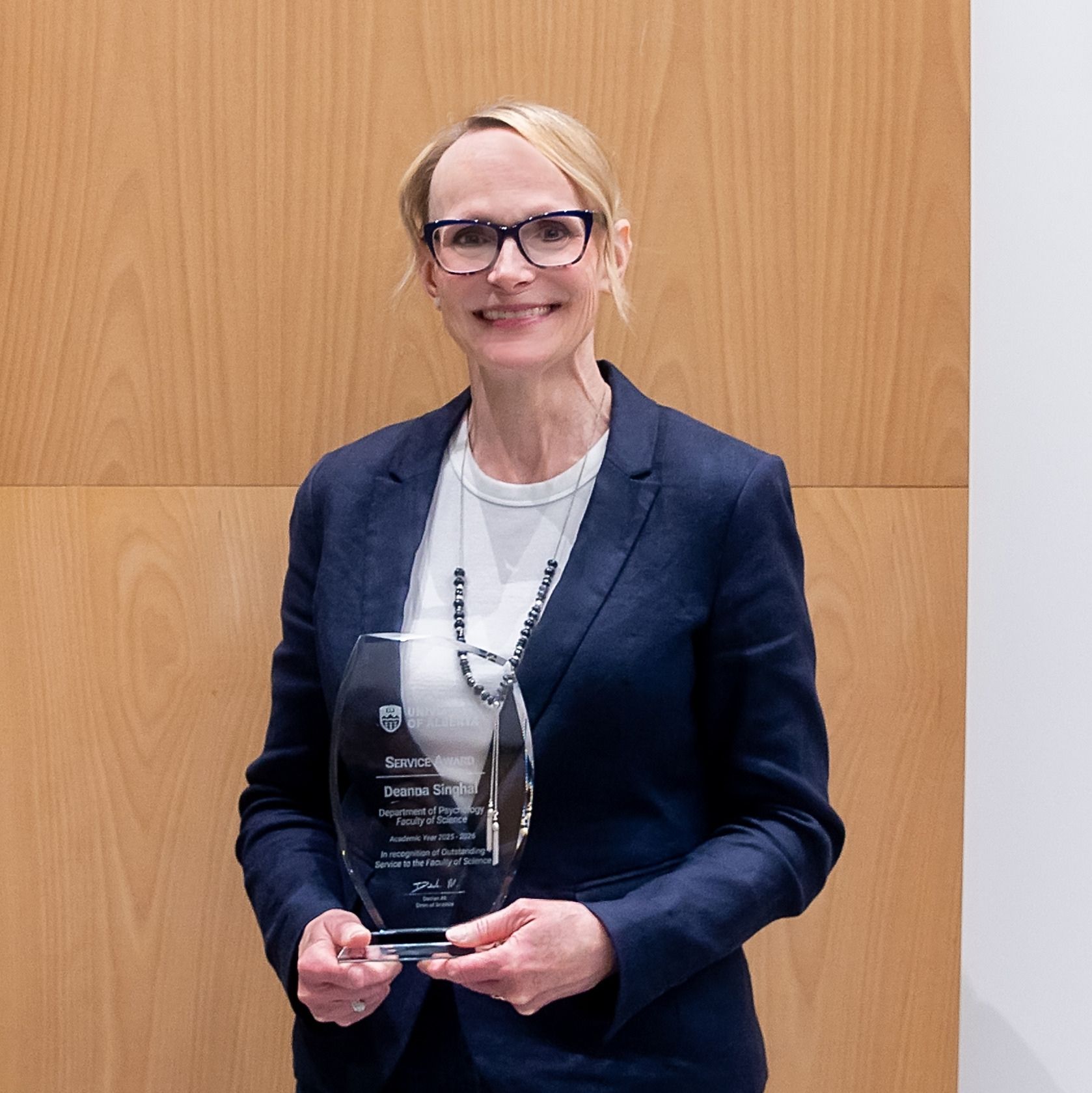
What is your position title in the Faculty of Science? What does your work focus on?
I am a faculty service officer for the undergraduate teaching and learning program in the Department of Psychology, and also the associate dean (teaching and learning) in the Faculty of Science.
What philosophy do you bring to your work (research, teaching and/or service) in the faculty?
My work philosophy involves being people-centred. I try my best to be respectful and conscientious of a person's needs, whether they are a student, faculty, or staff and respond in a timely manner. I believe in evidence-based solutions, which often involve open communication with different parties. One of the best things about my job is the engagement with others in Science, and a number of different offices across campus (e.g., Faculty of Arts, Academic Success Centre, Student Success and Experience). Through these engagements, strong working relationships develop, which foster integrated approaches to solving problems.
What was your reaction when you found out you'd received this award? What does this recognition mean to you?
I was extremely moved, as it means a great deal to have my colleagues nominate and choose me for this award. It reinforces the work I have been doing, and gives me a great deal of satisfaction to know that others appreciate my efforts. I feel very privileged to work in the Department of Psychology and the Faculty of Science. There are so many great people that work hard to provide excellent academic opportunities, and I am very grateful and appreciative of that work environment!
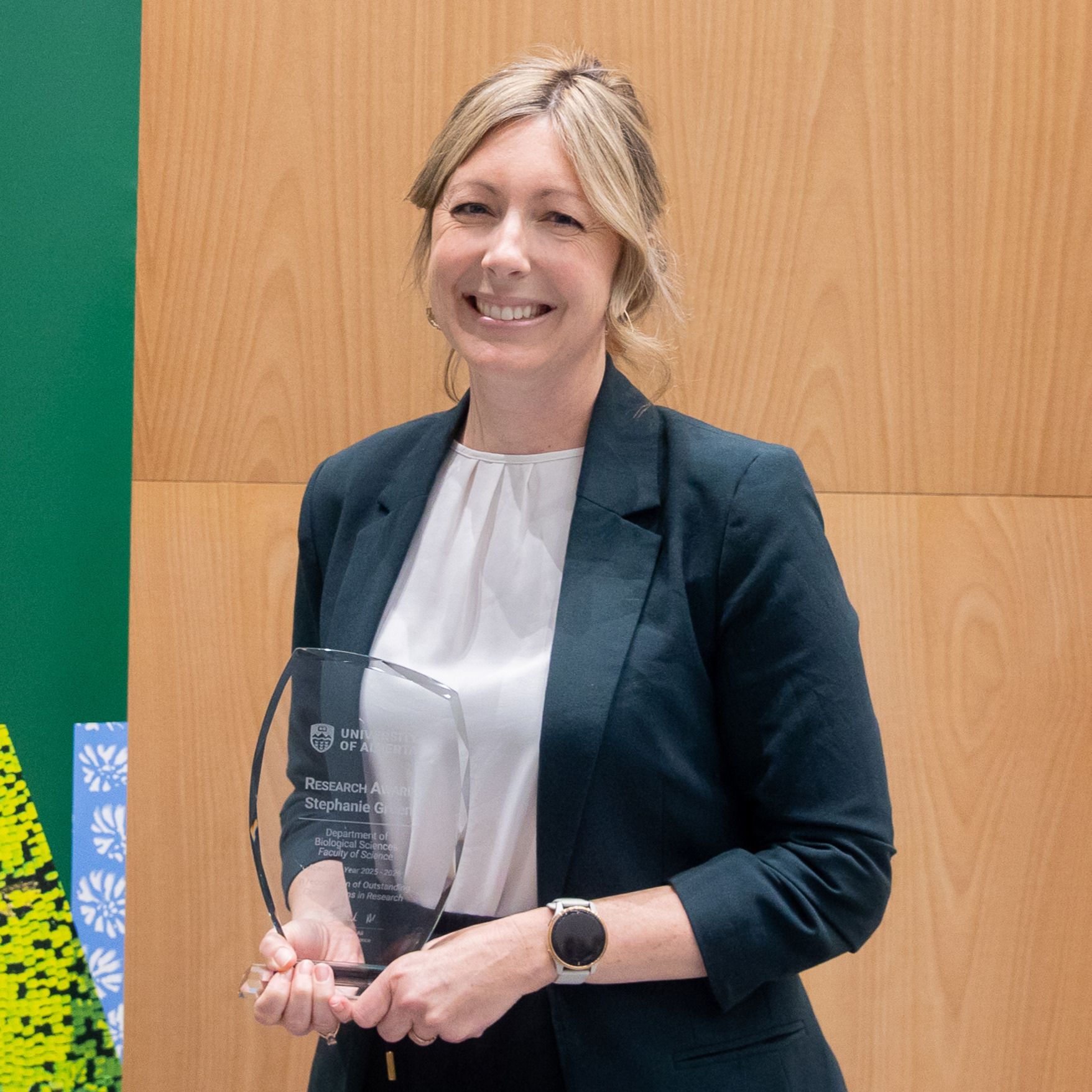
Stephanie Green, Faculty Of Science Research Award
What is your position title in the Faculty of Science? What does your work focus on?
I am a professor of biological sciences and Canada Research Chair (Tier 2) in Aquatic Global Change Ecology and Conservation. I lead the CHANGE Lab, which studies the impacts of global change on marine ecosystems and identifies strategies for biodiversity conservation and recovery.
What philosophy do you bring to your work (research, teaching and/or service) in the faculty?
My approach to ocean biodiversity science is highly collaborative and transdisciplinary. Our lab focuses on co-producing ecological information through strong partnerships with government agencies, non-profits, and local communities. By integrating diverse quantitative methods with stakeholder perspectives, we strive to provide the adaptive tools and reflective insights necessary to bridge the gap between ecological science and conservation action.
What was your reaction when you found out you'd received this award? What does this recognition mean to you?
I was elated! This recognition is shared with many wonderful graduate students, postdoctoral fellows, and undergraduate researchers who make up the CHANGE Lab. It is an honour for our research achievements to be recognized by the Faculty of Science amidst all of the amazing science being done by teams across our faculty.
Michael Woodside, Faculty Of Science Graduate Mentoring Award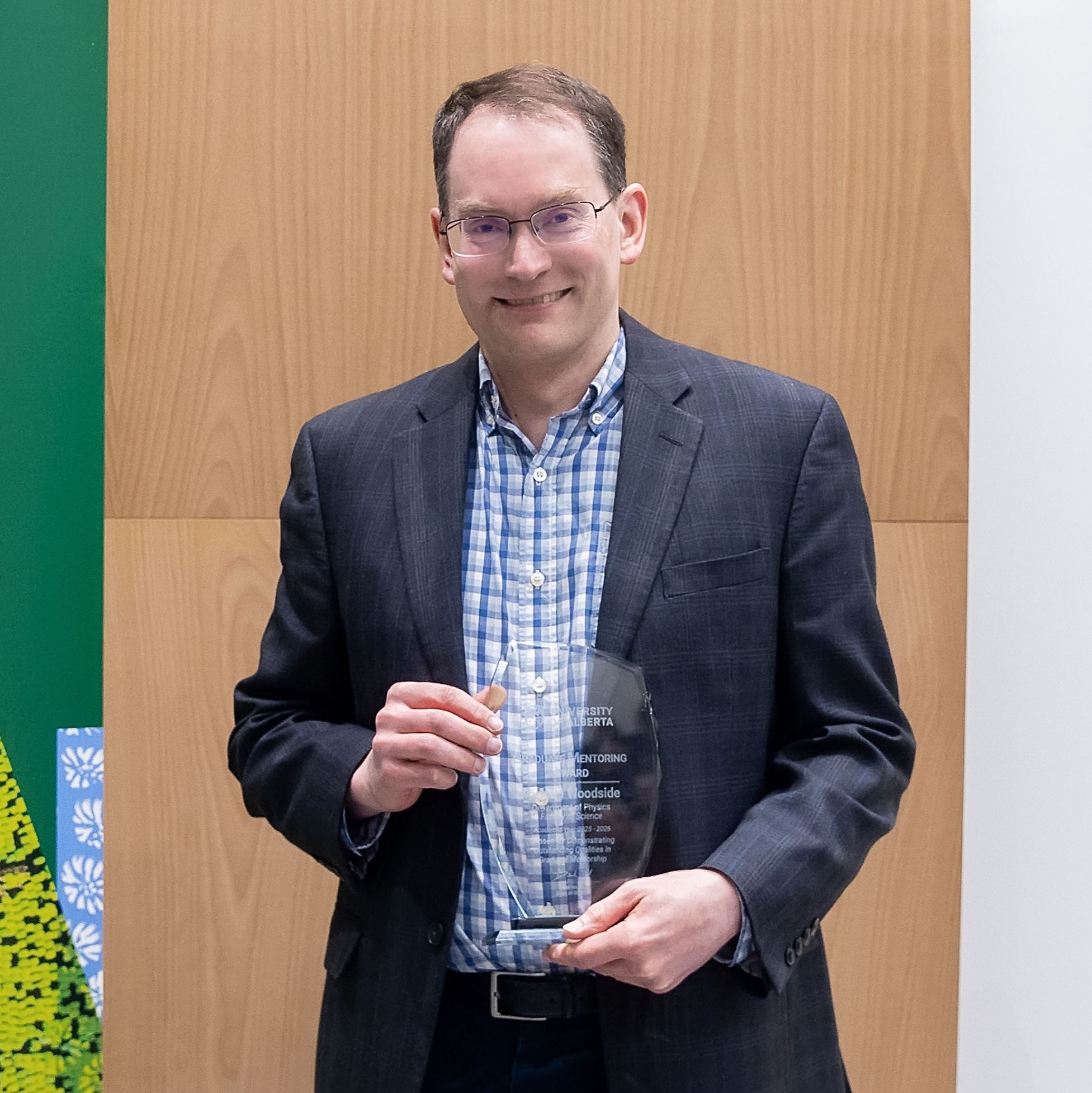
What is your position title in the Faculty of Science? What does your work focus on?
I am a professor in the Department of Physics, and also a member of two interdisciplinary research institutes on campus, the Centre for Prions and Protein Folding Diseases and the Li Ka Shing Institute of Virology. My research focuses on how complex structures self-assemble in biological systems at the single-molecule level, studying not just the physics of folding reactions but also how folding is related to biological function and disease, with applications to neurodegeneration, viral infection and propagation, and drug discovery.
What philosophy do you bring to your work (research, teaching and/or service) in the faculty?
I aim to teach students not just the technical skills they need to succeed in their projects, but also the outlook and attitudes that enable scientific excellence: meticulous attention to detail in experimentation, rigorous analysis and modeling, and careful interpretation that guards against preconceptions and biases. I draw inspiration from the perspectives and questions raised in a wide range of fields beyond physics, always staying open to exploring new problems and using new methods. Finally, I try to help students experience the wonder and awe that science instills in me, with its ability to reveal how the natural world works and provide solutions to important problems.
What was your reaction when you found out you'd received this award? What does this recognition mean to you?
I was of course thrilled to find out I had received the Faculty of Science Graduate Mentoring Award! It is particularly meaningful for me because the award is nominated directly by the students themselves. My goal is to position students for success in the careers of their choice and support them to achieve their dreams and ambitions even after they leave the lab, so it is very gratifying to know that the students value these efforts and judge them worthy of this award.
Biological Sciences EDI Committee, Faculty Of Science EDI Award
Congratulations to the Department of Biological Science EDI Committee on receiving the Faculty of Science EDI Award! The 12 member team, comprising faculty, staff, postdoctoral researchers, graduate and undergraduate students has embodied a productive working group model to achieve tangible outcomes for inclusion and systemic change.
This recognition also honours the past committee members whose vision, dedication and foundational work made these achievements possible. Their contributions are woven into everything the committee continues to accomplish.
In 2024, the committee co-developed a comprehensive survey to assess departmental climate and demographic landscape. The survey report serves as a departmental roadmap for addressing gaps in belonging, representation, and engagement. Last year, the EDI committee also made strides for graduate student success by creating a Student-Supervisor Relations Worksheet to facilitate transparent, proactive conversations about mutual expectations in research environments. These resources — combined with those for wellness, mental health support, conflict resolution, and crisis — are shared with all new graduate students. The team has also developed a worksheet resource for field researchers to ensure safety and inclusion are prioritized in remote environments, and the team has led graduate student admission policy reform with regard to English Language Proficiency requirements to remove systemic barriers for international applicants while maintaining high academic standards. Furthermore, the committee engages in community outreach activities, including a monthly EDI newsletter and a recent graduate research trainee workshop designed to increase communication, inclusion, and belonging.
The team’s dedicated and passionate contributions — past and present — have resulted in practical resources to make a difference in the day-to-day activities of colleagues and students — leading to their recognition with this year’s Faculty of Science EDI award. Congratulations to the members of the Biological Science EDI Committee!
|
|
Duane Froese, FacultyFaculty Of Science Indigenous Initiatives Award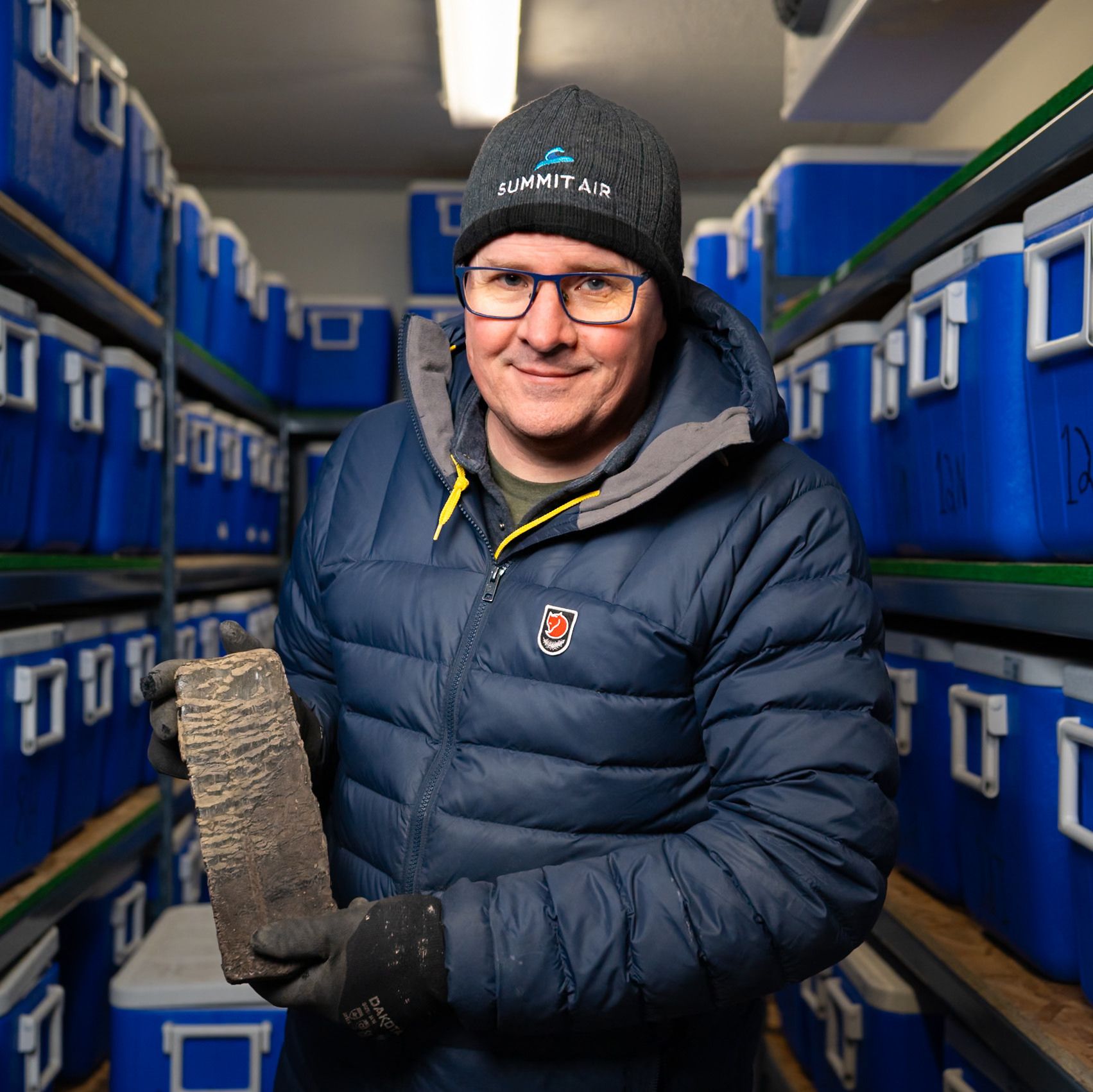
What is your position title in the Faculty of Science? What does your work focus on?
I'm a professor in the Department of Earth and Atmospheric Sciences, and I direct the Permafrost Archives and Cryosphere Sciences Laboratory in CCIS. The lab's work focuses on permafrost — perennially frozen ground — and how it is changing across northern Canada, particularly in the Sahtu Region of the Northwest Territories. We use field measurements, remote sensing, and geophysics to understand where permafrost is thawing, how fast, and what that means for the landscape and the people who live on it. A large part of what we do is directly applied — working with Sahtu Dene and Métis communities, northern governments and governance organizations to address questions they have identified as priorities: Where is the ground beneath community infrastructure becoming unstable? Are legacy oil and gas waste sites still safely contained by permafrost? What is happening to the land, water and permafrost in areas that have recently burned.
What philosophy do you bring to your work (research, teaching and/or service) in the faculty?
The work that has mattered most to me has come from listening before proposing. When I returned to work in the Sahtu after a long absence — I had worked in the area as a student doing pretty traditional geological mapping 25 years earlier — it was immediately clear that communities were already observing and describing changes to their landscape that the scientific record had barely begun to document. Changes that I hadn't seen earlier that were happening at rates I wasn't expecting. That experience shaped how I think about research in the North — the knowledge is there, the urgency is real, and the job of a research group like ours is to ask whether we can contribute something useful to questions that matter to the people most directly affected. That means building relationships over years rather than parachuting in for a field season, training students who take that responsibility seriously, and making sure findings get back to communities in forms they can actually use — not just into journals. It’s not quick science by any means, but hopefully has more lasting impact.
What was your reaction when you found out you'd received this award? What does this recognition mean to you?
Honestly, my first reaction was that this reflects the contributions of a lot of people who aren't named on the nomination. The graduate students especially — Alexandre Chiasson, Jeff Campbell, Michelle Landry, Joe Young, Alejandro Alvarez, Médéric Lorry, Gabrielle Hatten — have each put in the sustained, patient work of building relationships in communities far from Edmonton, and the science is better because of that. And the recognition reflects what the K'ahsho Got'ine Foundation Guardians, the Sahtu Secretariat, the Sahtu Renewable Resources Board, and the communities of Fort Good Hope and Tulit'a have been willing to build with us. For me personally, it's meaningful because it signals that the Faculty of Science sees this kind of community-grounded work as something worth doing — not as a distraction from research – but as what modern research in northern Canada could look like.
The Associate Dean of Learning and Innovation Besties (ADLIB) Awards
Each year, each department is asked to identify an instructor that embodies a particular quote in their teaching. This year's ADLIBs embody the following quote by Fred Rogers:
"There are three ways to ultimate success. The first way is to be kind. The second way is to be kind. The third way is to be kind."
This year’s annual ADLIB honorees are:
Manon Lepage, ADLIB (Biological Sciences) 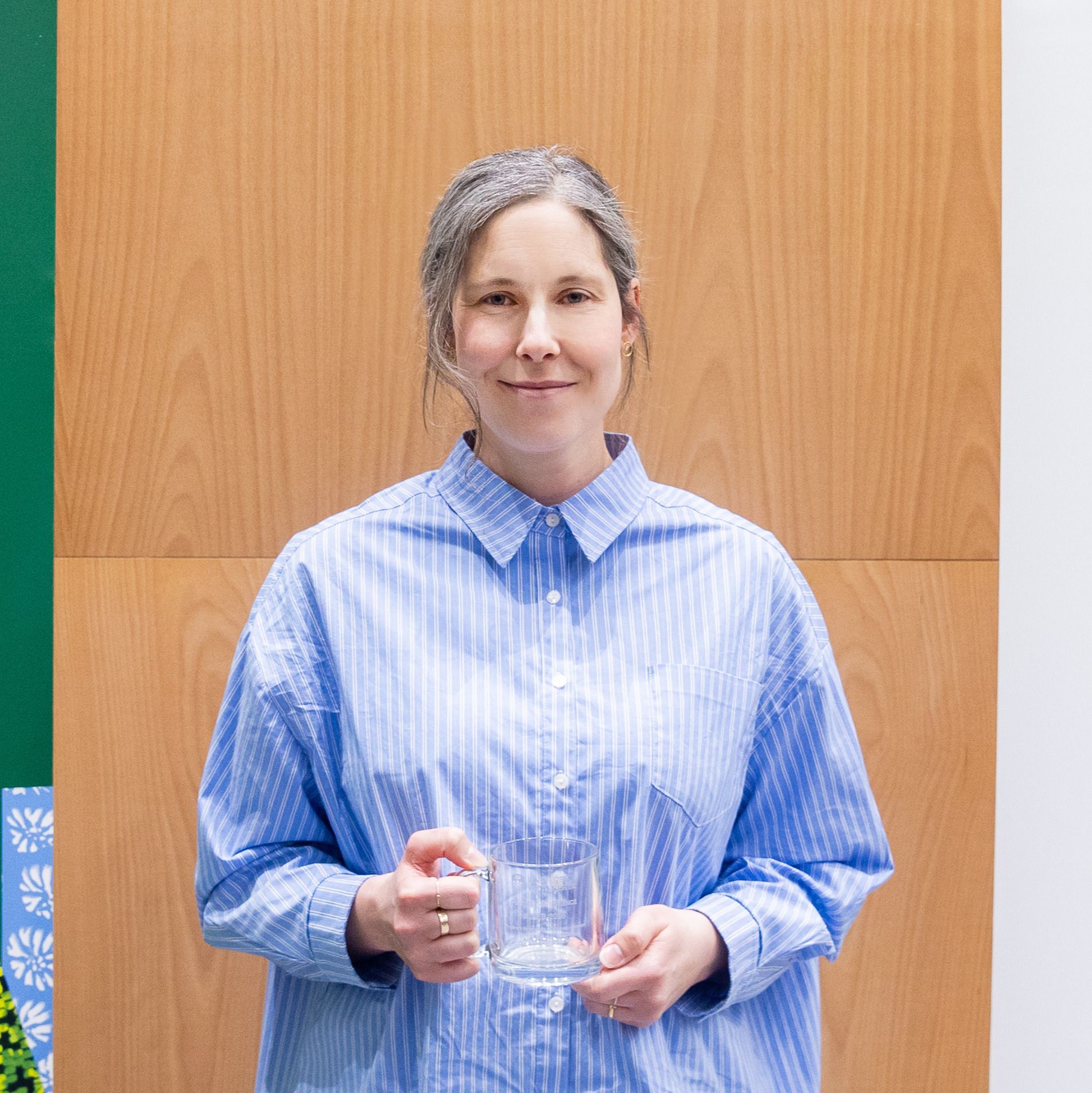
What is your position title in the Faculty of Science? What does your work focus on?
I am a lab coordinator and support team manager in the Department of Biological Sciences, where I oversee the laboratory component of BIOL 108: Introduction to Biological Diversity. I design experiments, assessments, and teaching resources to support more than 1,400 students each year, and supervise approximately 30 teaching assistants who serve as instructors across the course’s lab sections.
What philosophy do you bring to your teaching in the faculty?
The labs are a rapid journey through numerous phyla and techniques. I structure them by breaking down concepts into manageable steps, helping students build understanding before reconnecting ideas within a broader biological context. Recognizing that the first terms can be challenging for incoming students, I provide tools for self-assessment and flexible supports (e.g., late credit extensions) to give students some leeway in managing their workload and navigating diverse life circumstances.
What was your reaction when you found out you'd received this award? What does this recognition mean to you?
I’m incredibly grateful to my colleagues for putting my name forward. They are my go-to supporters, thoughtful listeners, trusted advisors (especially when a much-needed reality check is in order), and the best collective hive mind that makes every challenge easier to navigate.
Shira Joudan, ADLIB (Chemistry)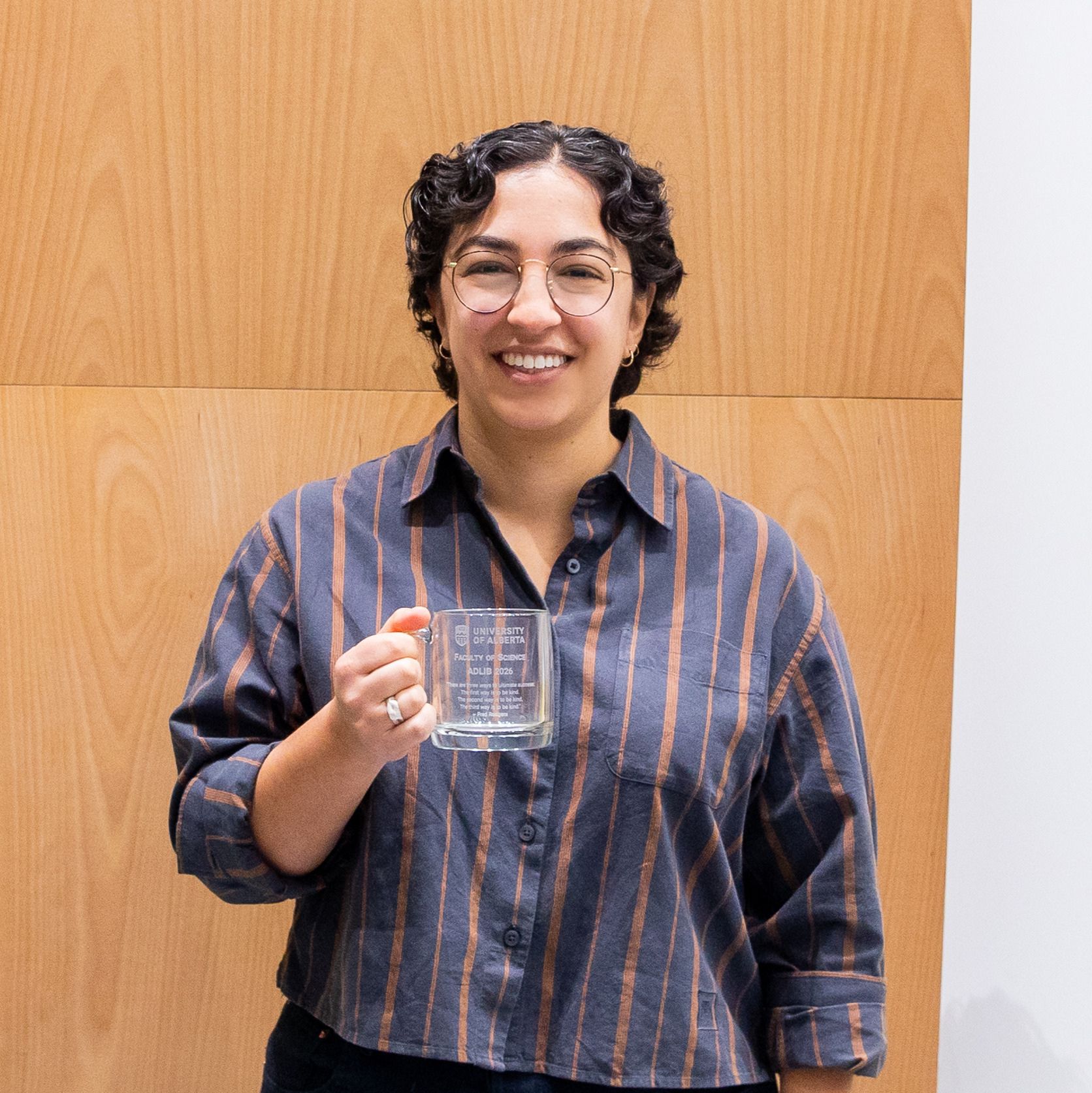
What is your position title in the Faculty of Science? What does your work focus on?
I am an assistant professor in the Department of Chemistry, where I research and teach analytical and environmental chemistry. My work focuses on what happens to harmful organic contaminants when they enter the environment, with a particular focus on the notorious class of contaminants per- and polyfluoroalkyl substances (PFAS). My group advances mass spectrometry-based methods for trace measurements to understand contaminant sources and transport, and studies how environmental reactions transform contaminants, all with the goal of understanding exposure risks and working towards a more sustainable world.
What philosophy do you bring to your teaching in the faculty?
I always aim to be fair and clear with students. Uncertainty can cause a lot of stress, so I aim to build trust by being honest if I have made a mistake and sticking to clearly communicated expectations. So far in my 3.5 years at the UofA, I have taught classes between 90-150 students. Despite the large size, I aim to learn as many names of students as possible. I'm not perfect, but at least the effort seems to go a long way with students' experiences.
What was your reaction when you found out you'd received this award? What does this recognition mean to you?
I was really touched to receive this award. As an assistant professor, there are a lot of tasks pulling me in different directions, especially the need to balance getting my research program started and mentoring graduate students while teaching my large undergraduate classes. The specific theme of this year's award is particularly special because I care about my students and do my best to create a welcoming environment in my courses.
Sadaf Ahmed, ADLIB (Computing Science) 
What is your position title in the Faculty of Science? What does your work focus on?
My position is full faculty lecturer. My work focuses on teaching, developing course materials, and coordinating first-year courses to ensure a strong foundational experience for students entering the discipline.
What philosophy do you bring to your teaching in the faculty?
My teaching philosophy is grounded in care, connection, and accessibility. I believe meaningful learning occurs when students feel supported, respected, and engaged. Innovation in teaching matters most when it is rooted in this care — when strategies, tools, and techniques are used to foster connection, confidence, and a sense of belonging. I strive to create inclusive environments for diverse learners where students feel safe to ask questions, take risks, and grow.
What was your reaction when you found out you'd received this award? What does this recognition mean to you?
I am very grateful to my department for nominating me for this award. This recognition is deeply meaningful — it affirms my commitment to teaching with care and intention, and motivates me to continue fostering supportive, inclusive learning environments.
Marilyn Huff, ADLIB (Earth & Atmospheric Sciences)
What is your position title in the Faculty of Science? What does your work focus on?
I am the laboratory coordinator for the upper-level undergraduate labs in Earth and Atmospheric Sciences, with an emphasis on the labs for second- and third-year geology courses. Mostly, I support the TAs who do the actual teaching. I make sure we have all the materials needed for the labs, replacing and augmenting where needed and creating new materials (such as 3D-printed crystallography blocks) useful for teaching; keep the polarizing microscopes in good working order (we have 70+ of them and 6 courses per year with microscope-based labs); and generally keep things running as smoothly as I can.
What philosophy do you bring to your teaching in the faculty?
Labs give the students the hands-on experience that explains what they are being taught in lecture. I want the students to understand the “whys” and “hows” that constitute science and so I give them the best tools I can find to help them. I am always looking for better ways to explain things. They’ll make the next discoveries – they just need to understand what we know now. I also try to keep track of the students in an effort to catch the ones who are struggling before the struggle becomes overwhelming. Sometimes, just knowing that someone noticed and cares is enough to turn them around. Chocolate helps, too!
What was your reaction when you found out you'd received this award? What does this recognition mean to you?
Surprise that this quality is valued and delight that it is. I feel honoured to be recognized for so humble a trait. Others have been kind to me — I try to pass it on.
Ryan Morrill, ADLIB (Mathematical & Statistical Sciences) 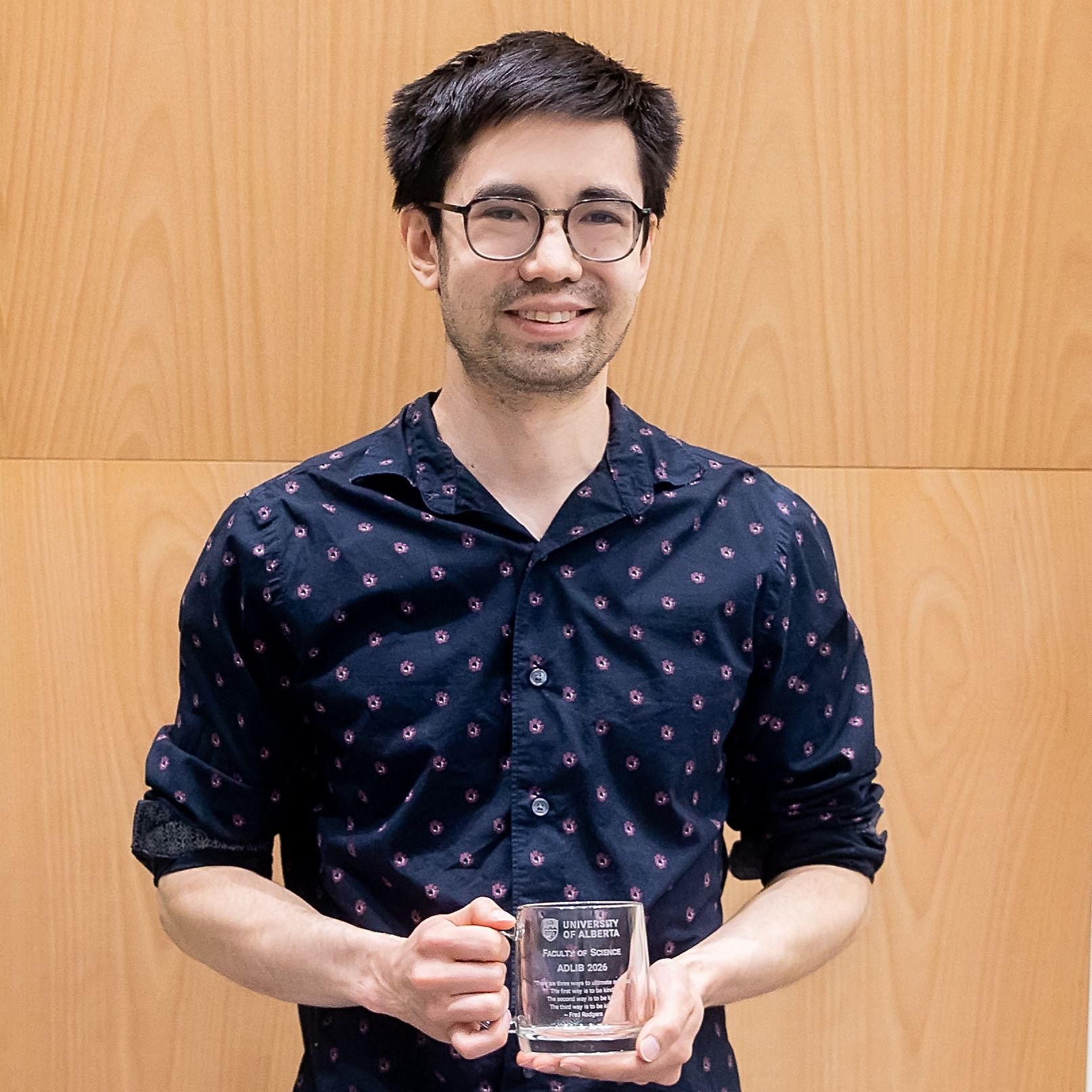
What is your position title in the Faculty of Science? What does your work focus on?
I am an assistant teaching professor in the Department of Mathematical and Statistical Sciences. I mostly teach first year calculus, engineering students, and elementary education students. Outside of that, I am primarily focused on math outreach — that is, bringing mathematics education to students outside the university. My main outreach initiative is the Math Circle, which is a weekly math enrichment program for students ages 11-14.
What philosophy do you bring to your teaching in the faculty?
I believe it is important to remember where students come from and to meet them where they are. Many students have fear, anxiety and even trauma around mathematics, so it can be even more important to create a positive and welcoming atmosphere in the classroom. We must celebrate their "wins" and encourage their "misses!"
I believe teaching is a skill like any other which requires targeted reflection and practice. There is always more we can do to improve our craft, so it's important to keep pushing forward! It is important to build a community around teaching as it can be incredibly insightful to see the philosophies and approaches of our colleagues. This was the reason why I started the Teaching and Learning seminar in our department.
What was your reaction when you found out you'd received this award? What does this recognition mean to you?
I was surprised, happy, and grateful! There are many excellent instructors in our department, so it means a lot to be recognized among them. I am very honoured to receive this award.
Craig Heinke, ADLIB (Physics) 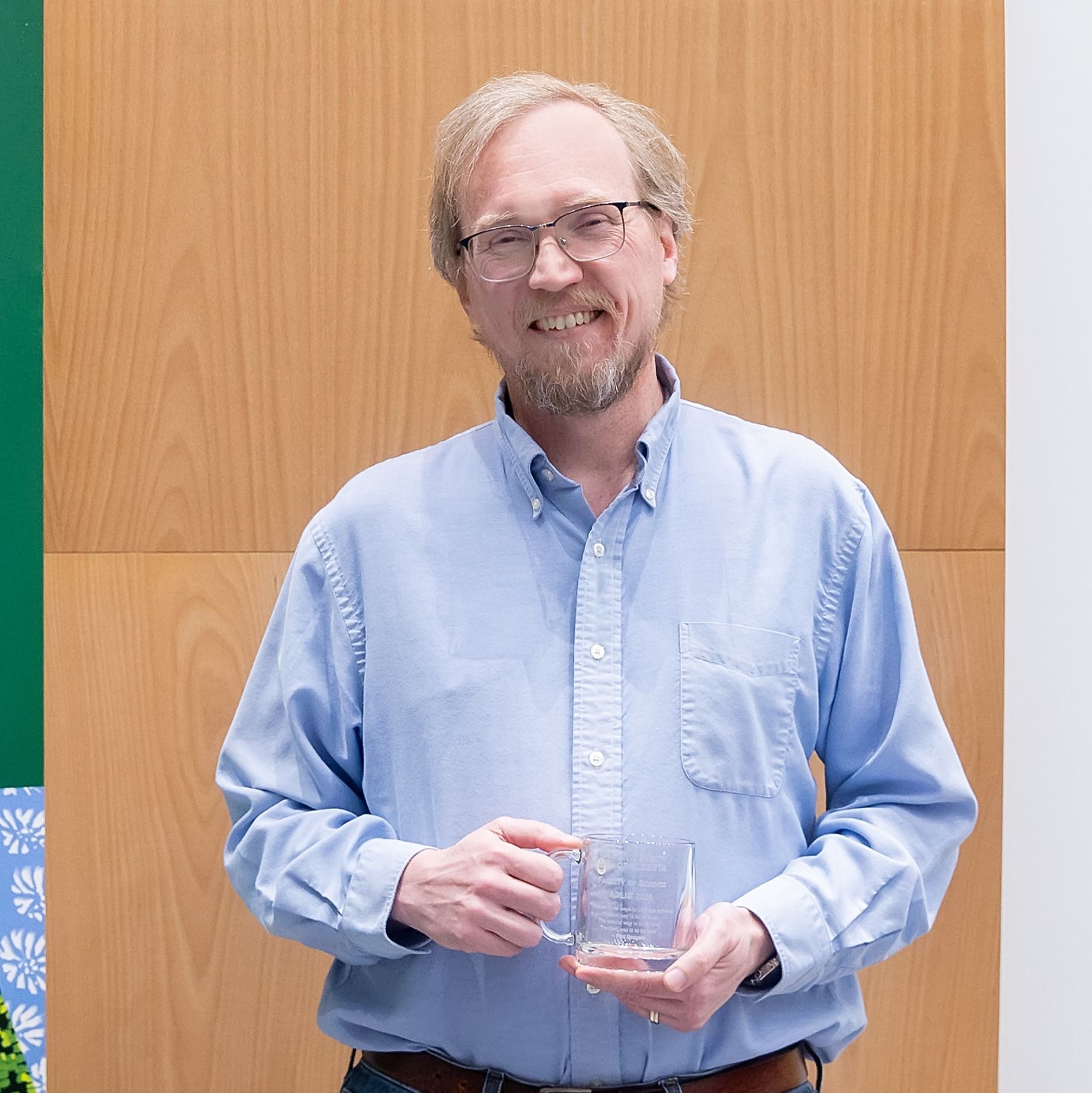
What is your position title in the Faculty of Science? What does your work focus on?
I’m a professor in the Department of Physics. My research focuses on dead stars (such as black holes and neutron stars), high-energy astrophysics (like dead stars tearing matter from their stellar companions), and globular clusters (dense clumps of order a million old stars). I teach introductory physics and astronomy courses, and higher-level astrophysics courses.
What philosophy do you bring to your teaching in the faculty?
When teaching, I’m always thinking about how I can improve. I’m interested in learning techniques that other teachers use, and in getting feedback from my students.
What was your reaction when you found out you'd received this award? What does this recognition mean to you?
I’m surprised, and I feel very honored. I certainly feel that I still have a lot to learn about teaching from colleagues with more experience. To me, this means that I should feel encouraged that my teaching is appreciated by my students and peers.
Ben Whittaker, ADLIB (Psychology)
What is your position title in the Faculty of Science? What does your work focus on?
I am a postdoctoral researcher in the Animal Cognition Research Group in the Department of Psychology. I study what animals learn from their physical and social environments, why some individuals show strong personal biases, and how different sources of information are combined to guide key decisions.
What philosophy do you bring to your teaching in the faculty?
My research focuses on how information is integrated to actively reason through uncertainty, and my teaching follows this same framework. I use problem-solving activities, often with fictional systems, to help students develop “ways to think”, not just “what to know.” I emphasize creating an inclusive and collaborative space where diverse perspectives are shared and respected.
What was your reaction when you found out you'd received this award? What does this recognition mean to you?
I was genuinely surprised! At first, I felt undeserving, but the reaction of my students and colleagues helped reframe my perspective. It reminded me that what feel like small acts of everyday kindness can have a big impact in unexpected ways. I feel lucky to work in such a supportive department.